 ProShield Pest SolutionsProShield Pest Solutions
We find how they get in
Pest control service in Longmont, CO should begin with an inspection, not a spray wand — because the mice in your pantry off Hover Street and the ants crossing a Clover Basin countertop are both getting in through a gap you can point at. ProShield works the perimeter first, writes down where the entry points are, treats what is active, and tells you plainly what a treatment will and will not fix. Call (303) 531-5636, or text a photo of the nest, the droppings, or the trail and we will tell you what we are looking at.
Call (303) 531-5636
Tell us about your pest control service job — we'll get you a fast quote.
A firm, all-in price confirmed before we start — no surprises.
On time, done to standard, and tidy when we leave.
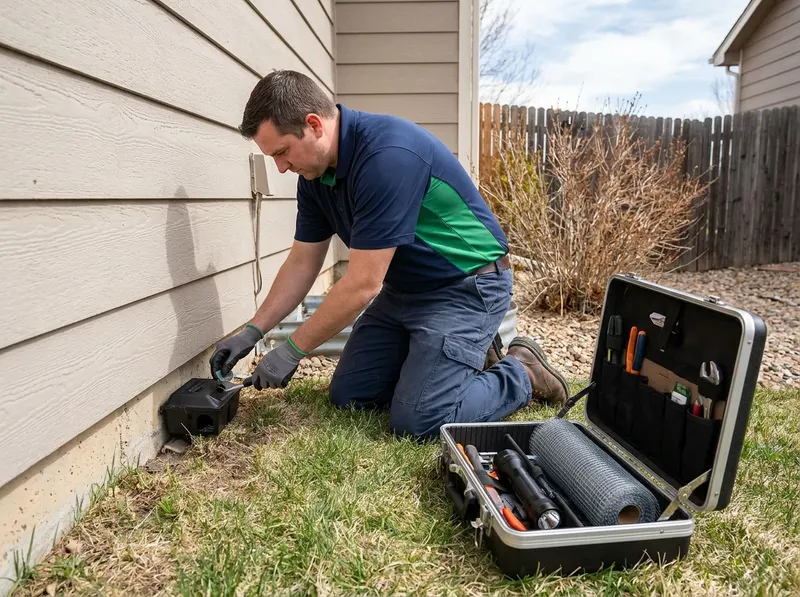
ProShield provides rodent control for Longmont homes, starting with the droppings, gnaw marks and rub trails that show which wall voids and pantry runs are active. Mice move indoors from field edges east of Longmont and along canyon-cooled evenings from mid-September, and a single mouse in a Somerset Meadows garage usually means an opening the width of a dime somewhere on the perimeter. Service includes trapping, monitoring placement in garages, crawlspaces and utility rooms, and a written list of the entry points we found so the problem does not restart in December. We also check the places homeowners rarely open: under kitchen sink cabinets where the supply lines pass the wall, behind the dishwasher, the water heater closet, and the sill plate above an unfinished basement wall. Trapping is checked and adjusted rather than set once and forgotten, because a trap in the wrong ten feet of a Longmont crawlspace catches nothing.
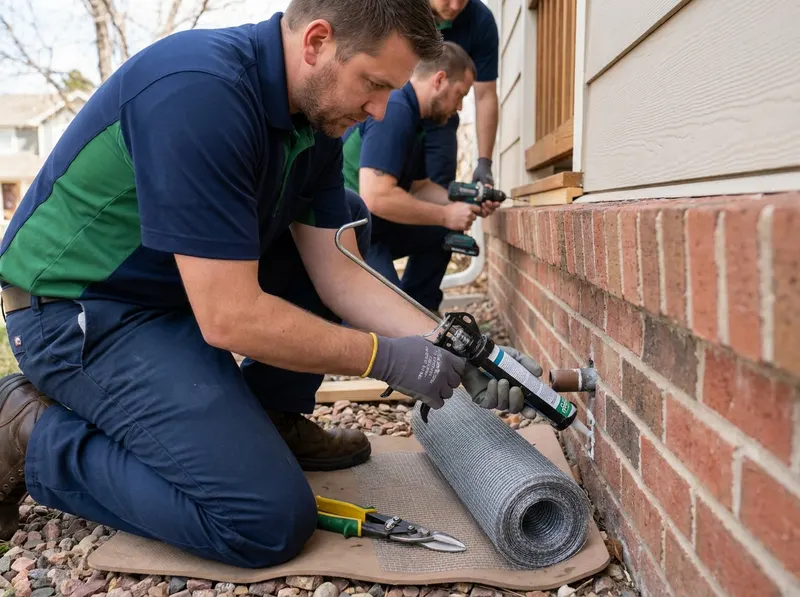
Rodent exclusion is the sealing work that stops mice from re-entering, and it is the service most often skipped by cheap Longmont pest control. Common openings on Front Range houses include garage door corners, dryer and bath vents without screens, gaps where gas and sprinkler lines pass the foundation, and separation cracks in expansive clay soil around older Old Town Longmont foundations. Weep holes in brick veneer, crawlspace vent screens rusted through, and the gap under a garage door with a compressed sweep account for a large share of what we find. We measure and document each opening, then seal with hardware cloth, sheet metal or sealant appropriate to the location — mice chew foam and steel wool packs out, so those get used only where nothing better fits. Exclusion is priced by the number and reach of openings, and the exact figure is confirmed on-site before any work starts.
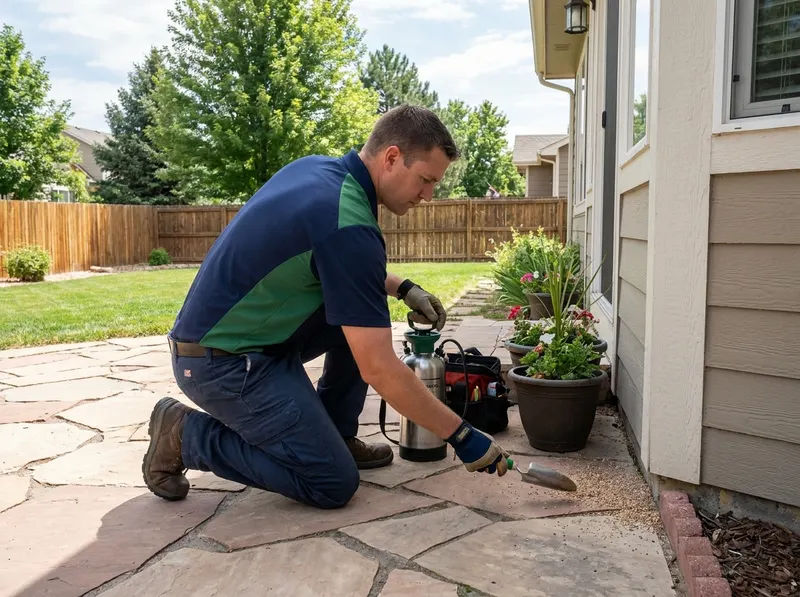
Ant control in Longmont peaks from April through June, when odorous house ants stream along countertops and carpenter ants show up near moisture-damaged trim and window frames. Those two species need different handling: odorous house ants respond to non-repellent products and baiting that carry back to the colony, while carpenter ants usually mean a satellite nest in damp wood that has to be located, not just sprayed. Spraying a visible trail with a repellent product is the most common DIY mistake in Longmont kitchens — it splits the colony and scatters the trail into two new ones. Treatment covers interior trails, the exterior perimeter, and the mulch beds, tree limbs and irrigation lines that bridge ants onto the house. Perimeter appointments fill fastest in the first warm week of April.
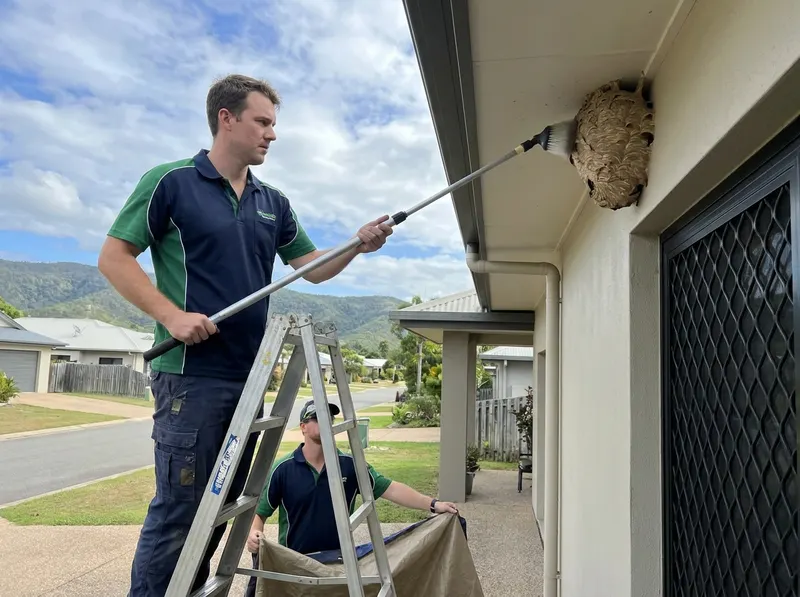
ProShield removes wasp, yellowjacket and hornet nests from Longmont homes from July through September, when sun-baked south and west walls, patio covers, playsets and soffit corners fill up fast. Yellowjackets nesting in the ground near lawns and along the Sandstone Ranch trail edges behave differently than paper wasps under an eave, and we treat each accordingly rather than knocking a nest down and leaving angry foragers behind. Ground nests get treated at the tunnel; aerial nests in soffit voids often need the void treated rather than the visible paper. Nest removal calls get scheduling priority in peak season. Text a photo of the nest and its height to (303) 531-5636 and we will tell you what it is before we arrive.
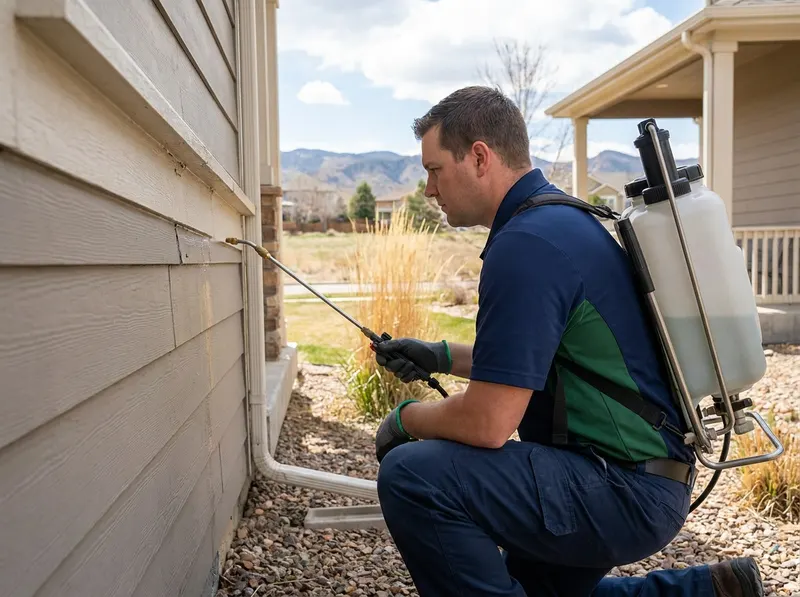
ProShield treats spiders in Longmont basements, crawlspaces, window wells and garages, where unfinished walls, floor joists and stored boxes give webs somewhere to anchor. Spiders follow their food, so a heavy spider population in a Rider's Ridge or Mill Village basement almost always means something else is getting in first — miller moths in early summer, boxelder bugs in fall, or small flies from a floor drain. Service includes web and egg-sac knockdown, targeted treatment of harborage along sill plates and window well corners, and screening or sealing recommendations for the wells and vents that feed the problem. Homeowners often book this before a holiday or a party; it is one of the faster visits we run, and one where the Entry-Point Report usually explains everything.

Mosquito pressure in Longmont runs June through August and is strongest for properties near Union Reservoir, McIntosh Lake and the St. Vrain Greenway, where standing water and shaded harborage sit within easy flight range of a backyard. ProShield treats the resting places adult mosquitoes use during the day — dense shrubs, the underside of deck framing, fence lines, ivy and low tree canopy — and walks the yard for the water sources that produce them: clogged gutters, tarps, sprinkler-fed low spots, unused wheelbarrows, birdbaths and window wells. Reduction is measured in how usable the patio is at dusk, not in zero mosquitoes, and we say that plainly up front. Repeat visits through the season hold pressure down better than a single application in July.
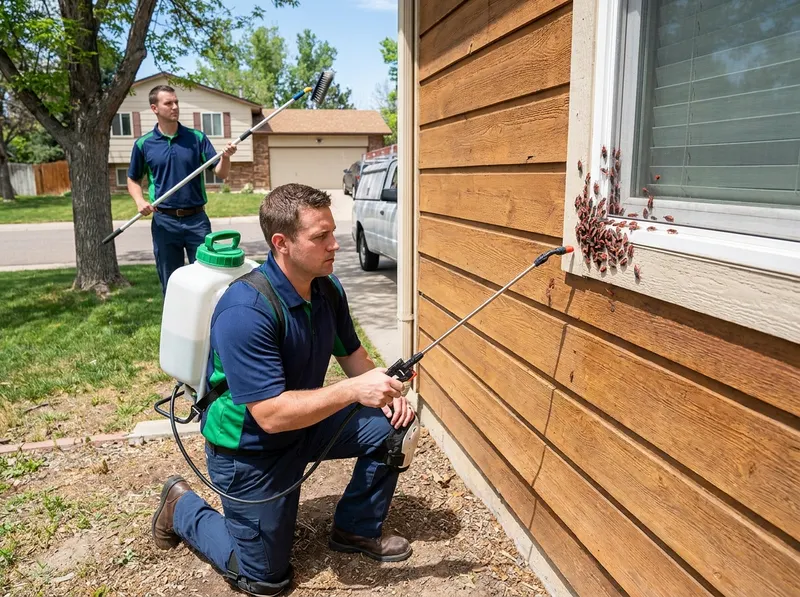
Boxelder bugs cluster on warm south and west walls of Longmont homes in fall, then work into window frames, siding seams and attic vents to overwinter, reappearing on warm winter afternoons indoors. ProShield treats boxelder bugs on the exterior before they congregate, which is far more effective than fighting them once they are inside a wall — indoor spraying does little for insects already tucked into a void. Properties with boxelder, maple and ash near creek corridors and older tree-lined streets around Roosevelt Park and Old Town Longmont see the heaviest activity. Service covers the sunny wall surfaces, foundation line, window and door frames, and the vent and soffit gaps they use. Fall cluster flies in attics and upper-floor windows get handled on the same visit when present.
The real decision in Longmont is not which chemical — it is whether you are buying a treatment, an exclusion, or a plan. If you have one visible problem and a deadline, choose a one-time targeted treatment: a single wasp nest under a south-facing eave, an ant trail in one kitchen, a spider-heavy basement before guests arrive. That runs $250 to $450 in most Longmont homes and solves what you can see. The trade-off is that a one-time treatment kills the current population without changing the building — if the gap is still open, the next generation walks the same road. If the same pest keeps coming back weeks after a DIY spray or a hardware-store bait station appeared to work, choose exclusion. Sealing rim joists, crawlspace vents, garage door corners, dryer vents and the foundation cracks that open up in Front Range clay soil costs more up front — $450 to $2,000 or more depending on how many openings and how much of it sits on a ladder — but it is the only fix that changes the outcome instead of resetting the clock. If you want steady pressure kept off the house year-round, choose a quarterly plan at $250 to $375 per visit, which is the right call for homes backing the St. Vrain Greenway, irrigated lawns near Ute Creek, or older Old Town Longmont houses with stone foundations and multiple ways in. The trade-off is cost spread over the year versus reacting each time something shows up. Landlords and restaurant or office managers usually want the opposite balance: scheduled documentation and a predictable per-visit rate rather than emergency calls. Square footage matters less than perimeter complexity — a 1,400-square-foot ranch with a crawlspace, a detached garage and three utility penetrations takes longer to seal than a 2,600-square-foot slab-on-grade house in Somerset Meadows with one clean foundation line. **Can I just do this myself for $30?** For one wasp nest you can reach safely and one ant trail, sometimes yes. For mice, no — a store trap catches the mouse in the room, not the twenty feet of wall void it is nesting in, and it does nothing about the entry point. **Which one do most Longmont homeowners actually need?** In our scheduling, spring is ants and treatment, fall is mice and exclusion, and midsummer is wasps and same-week response. **What if you inspect and find nothing?** Then we say so, show you the two or three spots worth a caulk gun, and you are out the cost of one visit instead of a year of treatments you did not need. If you are not sure which of the three fits, we inspect first and tell you — including when the honest answer is a $250 visit and a tube of sealant instead of a plan.
| Service call | Upfront quote |
Your exact price is confirmed before any work begins.