
Rodent Control (Mice & Rats) in Longmont, CO
- Pest Control Service in Longmont
- Rodent Exclusion & Entry-Point Sealing
- Ant Control
- Wasp & Hornet Nest Removal
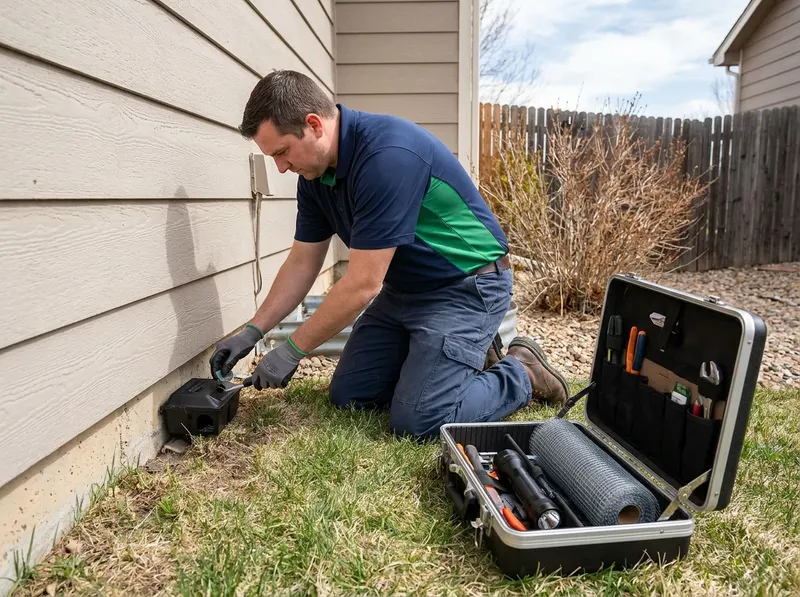
- What's included: a full interior and exterior inspection, an Entry-Point Report naming each gap found, trap and bait placement in the active areas, and a follow-up visit to check catches and confirm activity has stopped.
- How fast: most Longmont rodent calls are scheduled within a few business days, and trapping usually begins on the first visit rather than after a separate estimate appointment.
- What it costs: rodent work starts at a $250 minimum, with typical mouse programs running $250–$450 and rat or multi-structure work higher depending on access and sealing scope.
- What we take care of: mice, house mice in kitchens and pantries, roof-line and crawlspace entries, garage and utility-penetration gaps, and rat activity around alleys, sheds, and irrigation lines.
- How to book: call (303) 531-5636 to schedule a free on-site visit; exact pricing is confirmed in person once the entry points and access are seen, never guessed over the phone.
Longmont mice are seasonal opportunists. As canyon nights cool in September and October, deer mice and house mice move off field edges and ditch banks toward heated foundations — and the homes along the St. Vrain Greenway, the open ground near Sandstone Ranch, and the farm and irrigation corridors east of town toward Weld County feed a steady supply. A mouse needs about a quarter-inch gap. On older Old Town Longmont houses, that gap is usually a stone-and-mortar foundation joint, a rotted sill corner, or an unscreened crawlspace vent. On newer south-side builds in Clover Basin, Somerset Meadows, and Fox Meadows, it is almost always a construction detail: the gap where the AC line set or gas line enters the wall, a garage door bottom seal worn flat on the concrete, or a weep-hole and brick-veneer edge behind the landscaping. **Trapping without sealing is a rental agreement, not a fix.**
Rats are less common here than mice but not rare, and they behave differently. Norway rats favor burrows — along canal banks, under sheds and hot tubs, in dense juniper beds, and in alley spaces behind Prospect New Town and Old Town garages where trash and pet food sit close together. Rat work takes longer, uses heavier equipment, and depends more on outdoor harborage cleanup than interior traps. Voles and pocket gophers in irrigated Ute Creek, Southmoor Park, and Rider's Ridge lawns are a separate lawn-turf problem, not a house-mouse problem, and we will say so on the spot rather than sell you an indoor program you do not need.
Here is the honest decision-fit. A hardware-store snap trap and a $30 bait block will kill the mice that are already walking your pantry — that part is real. What it will not do is tell you the pipe chase behind the water heater is open to the crawlspace, or that a Mill Village garage side door has a half-inch daylight gap at the strike plate. That is the whole difference: **DIY removes individuals; exclusion removes the route.** If you have caught two or three mice and activity stopped, you may genuinely be fine. If you have caught mice in two consecutive months, or you are hearing scratching in a wall or ceiling, or you are finding droppings in more than one room, the entry point is still open and you are refilling the same hole with new animals.
On safety — the most common question from homeowners with dogs and raised vegetable beds in Lake Park and Prospect: interior work in living spaces leans on **mechanical traps in tamper-resistant or inaccessible placements**, not loose bait where a pet can reach it. Where rodenticide is appropriate, it goes in locked exterior stations secured to the ground or structure. We will walk you through the specific product, the label restrictions, and the re-entry interval before anything is placed, and we will place nothing in a bed you plan to eat out of. If you want a trap-and-seal-only approach with no rodenticide, say so — that is a reasonable request in a home with kids and dogs, and it works when the sealing is done properly.
Access drives both price and outcome. A crawlspace with a clean hatch and three feet of headroom seals faster and cheaper than an 18-inch belly crawl under a 1920s Old Town addition. A finished basement with drywall over the sill plate limits what can be sealed from inside, so the work moves to the exterior. We measure that in person, in Boulder County conditions, on your house — and the Entry-Point Report you get is yours to keep whether you hire us for the sealing or hand it to your own contractor.
Call (303) 531-5636Rodent Control (Mice & Rats) pricing in Longmont
| Rodent inspection with written Entry-Point Report | starts at $250 |
| Interior mouse program (trapping/baiting plus follow-up visit) | $250 – $450 |
| Rat program (multi-visit, exterior burrow and harborage work included) | $425 – $850 |
| Entry-point sealing / exclusion (per scope, materials included) | $350 – $1,400+ |
| Ongoing exterior rodent station service (per visit, minimum applies) | $250 – $375 |
Exact price confirmed free on-site before any work.
Rodent Control (Mice & Rats) — questions, answered
How much does mouse control cost in Longmont?
Mouse control in Longmont starts at a $250 minimum, and a typical single-family program with trapping plus a follow-up visit runs $250 to $450. Sealing entry points is priced separately by scope because a walk-in crawlspace and a tight 1920s Old Town foundation are very different jobs. Every number is a ballpark until the free on-site visit — the exact price is confirmed there, in writing.
Why do mice keep coming back to my Longmont house after I trap them?
Mice keep coming back to Longmont homes because the entry point is still open. Trapping removes the animals inside; it does nothing to the quarter-inch gap at a crawlspace vent, a garage door seal worn flat, or the wall penetration where the AC line set enters. Longmont sits next to field edges, ditch banks, and the St. Vrain corridor, so there is always another mouse ready to use the same route. Sealing is what ends the cycle.
When is rodent season in Longmont, and should I wait?
Rodent pressure in Longmont peaks from late September through winter as canyon and foothill nights cool and mice move toward heated foundations. Don't wait for that window — sealing done in summer keeps the fall push outside, and a single pair of mice can turn into a wall-void population before you hear them. Activity in January is also normal here, since mice already inside continue breeding in warm wall and attic voids.
Is rodent treatment safe for dogs and vegetable gardens in Longmont?
Yes, when it's placed correctly. Interior work in Longmont homes relies mainly on mechanical traps set in areas pets cannot reach, and any rodenticide goes in locked exterior stations anchored to the ground or structure. Nothing is placed in raised vegetable beds. Ask for a trap-and-seal-only program if you prefer zero rodenticide — that's a normal request in homes with kids and dogs, and it works when the exclusion is thorough.
Do you handle rats as well as mice in Longmont?
Yes. ProShield treats both mice and Norway rats in Longmont, including burrow activity along alleys behind Old Town and Prospect New Town garages, under sheds and hot tubs, and in dense shrub beds. Rat work takes more visits than mouse work and depends heavily on removing outdoor harborage and food sources alongside trapping. Call (303) 531-5636 and describe what you're seeing — droppings size and location usually tell us which animal it is before we arrive.