
Wasp & Hornet Nest Removal in Longmont, CO
- Pest Control Service in Longmont
- Rodent Control (Mice & Rats)
- Rodent Exclusion & Entry-Point Sealing
- Ant Control
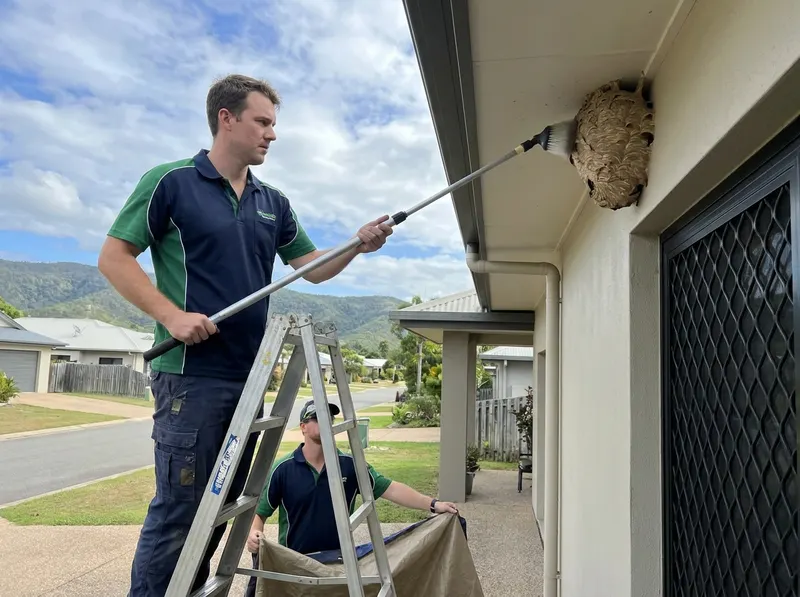
- What's included: species ID, direct nest treatment, removal of the physical nest where it can be safely reached, and an Entry-Point Report listing the eave gaps, weep holes, vents and soffit seams the colony used.
- How fast: most Longmont nest calls are scheduled same-day or next-day, and a single accessible nest is usually finished in 30 to 45 minutes on site.
- What it costs: $250 minimum for wasp and hornet nest work in Longmont; most single-nest visits land between $250 and $425, with wall-void yellowjacket colonies running higher.
- What we handle: western yellowjackets (aerial and ground), bald-faced hornets, European paper wasps, and mud daubers. Honeybee swarms are a beekeeper's job, not a pesticide job — we identify them and tell you so.
- How to book: call (303) 531-5636, describe where you see the traffic and how high it is, and we confirm the exact price on site before any treatment starts.
Wasps pick Longmont homes for the same reason we do: warm, sheltered south and west exposures. Paper wasps set small open combs under railings, grill lids, patio-table undersides and porch ceilings — the sun-baked stucco eaves on newer south-side streets around Clover Basin, Somerset Meadows and Rider's Ridge are prime real estate, and so are the deep wood soffits and covered porches in Old Town Longmont. Bald-faced hornets build the gray paper football, usually 8 to 20 feet up in a spruce, ash or cottonwood, and those go unnoticed until the leaves thin out. Yellowjackets are the ones that put people in urgent care: they nest in the ground, in irrigated turf and along mulch beds and window wells common in Fox Meadows, Ute Creek and Mill Village, and they get noticeably more aggressive from late July through the first hard frost as the colony peaks and switches to hunting sugar. That's why a nest you walked past in June suddenly feels dangerous in September.
The decision most homeowners face is <strong>one-nest removal versus a preventive eave treatment</strong>. If you have a single visible nest and a sting risk right now — a comb over the back door, hornets on the play structure — targeted removal is the right call, and it's done in one visit. If you get two or three nests every summer on the same wall, removal alone will keep repeating; a spring or early-summer treatment of eaves, soffit lines, gutter returns and porch ceilings is what stops queens from founding there in the first place. The honest trade-off: <strong>nest removal solves today's problem, not next season's</strong>. Queens overwinter elsewhere and pick new sites in spring, so no single visit makes a house permanently wasp-free.
Wall and soffit voids get their own approach, and it matters. When yellowjackets are using a weep hole, siding seam or gable vent, the fix is a dust treatment placed at the entry so returning foragers carry it into the nest — <strong>sealing the hole first is the worst thing you can do</strong>, because a trapped colony chews toward the interior drywall. Sealing happens after the colony is confirmed dead, and we tell you when that is. High aerial nests are handled with pole equipment from the ground where reach allows; if a nest sits behind fascia three stories up or inside a chimney chase, we say what's reachable and what isn't rather than guessing.
Safety questions come up constantly, and fairly. Products used for wasp work are applied at specific points — nest openings, eave voids, ground entrances — not broadcast across lawns or vegetable beds. We tell you the product used, the re-entry interval for kids and dogs, and we ask about raised beds and pollinator plantings before we start. We also ask you to keep people and pets indoors during treatment, since agitated yellowjackets will defend a nest 10 to 15 feet out. Service covers Longmont proper plus Boulder County neighbors, with the eastern edges of our area extending into Weld County — from Prospect New Town and Southmoor Park to Lake Park and the acreages out toward Union Reservoir and Sandstone Ranch. Call (303) 531-5636 and describe the nest location; the on-site look is free, and the price is confirmed before anyone opens a truck.
Call (303) 531-5636Wasp & Hornet Nest Removal pricing in Longmont
| Single accessible nest — eave, porch ceiling, shrub, ground-level | $250 – $325 |
| High or two-story aerial nest (pole/ladder reach required) | $295 – $425 |
| Ground-nesting yellowjackets in lawn, mulch bed or window well | $250 – $350 |
| Wall, soffit or gable-vent void colony (dust treatment + follow-up check) | $325 – $500 |
| Each additional nest treated on the same visit | From $250 |
| Preventive eave & soffit wasp treatment (spring/early summer) | $275 – $425 |
Exact price confirmed free on-site before any work.
Wasp & Hornet Nest Removal — questions, answered
How fast can you remove a wasp nest in Longmont?
Most Longmont wasp and hornet calls are booked same-day or next-day, and a single accessible nest takes 30 to 45 minutes on site. Nests over doorways, on play equipment, or near anyone with a sting allergy get priority scheduling — mention that when you call (303) 531-5636.
Why do yellowjackets get so aggressive in Longmont in August and September?
Longmont yellowjacket colonies hit peak population in late summer, and the workers shift from hunting insects to scavenging sugar and protein — which is why they crowd trash cans, patios and picnic tables around Roosevelt Park and backyard barbecues. A nest that was quiet in June can hold thousands of defensive workers by Labor Day, so late-season removal is handled with more caution and a wider exclusion zone.
Do you remove honeybees from Longmont homes?
No — honeybee swarms and colonies in Longmont are a beekeeper's job, not a pesticide job. We identify the insect first, because bees, paper wasps and yellowjackets are routinely confused, and if it turns out to be honeybees we tell you straight and point you toward removal rather than treatment.
Can I just spray a Longmont wasp nest myself with a can from the hardware store?
Aerosol foam can work on a small, low paper-wasp comb in a Longmont backyard if you hit it at dusk and have a clear escape path. It fails on ground-nesting yellowjackets and on colonies inside wall or soffit voids, where the spray never reaches the brood and the disturbed workers come out the nearest gap — often an interior one. Void colonies and high hornet nests are where professional equipment and placement matter.
Will removing the nest keep wasps from coming back to my Longmont house?
Removing the nest ends the current colony, but it does not stop new queens from founding nests the following spring on the same warm south- and west-facing walls common across Longmont neighborhoods like Clover Basin and Rider's Ridge. That's why every visit includes an Entry-Point Report on the eave gaps, weep holes and vents being used, and why homes with repeat activity do better with a preventive eave treatment early in the season.